
Work Package 12 - Enhance visibility of UoC through RACE communication and dissemination
WP12 covers dissemination, exploitation and communication. During RP1, D12.1 was completed and establishes the PDEC for RACE. The plan is aligned with the overall RACE vision of consolidating UoC as a centre of excellence in ageing research and as a driver of innovation and engagement in Greece and the wider region. The dissemination strategy includes peer-reviewed publications, open access, protocols and procedures on the RACE website, annual scientific meetings, thematic workshops, specialized courses and summer schools, and a final scientific conference. The exploitation strategy follows a Quadruple Helix model connecting academia, industry, government and civil society, with emphasis on translational research, industry collaboration, proof-of-concept development, patient/public engagement and clinical translation.
University of Crete Society Talk / Podcast on Healthy Ageing and the Launch of RACE
Date: 17 April 2025. Location: University of Crete premises / University of Crete public communication channel.
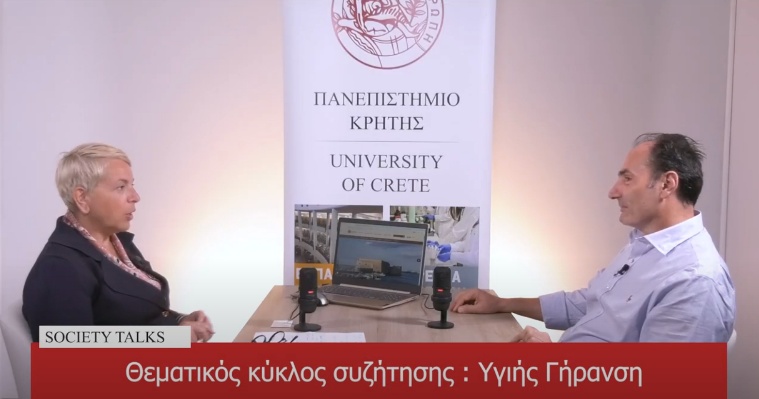
During RP1, RACE was presented to the wider academic and public community through a University of Crete society talk/podcast dedicated to the broader dimensions and societal impact of population ageing. The discussion formed part of the thematic cycle on “Healthy Ageing” and featured Prof. George A. Garinis, Professor of Genetics at the University of Crete and coordinator of RACE. The podcast addressed ageing as a major societal, demographic, biomedical and political challenge, rather than as a temporary scientific trend. The discussion emphasized that Europe is undergoing rapid demographic ageing and that the central objective should not simply be longer lifespan, but longer healthspan: more years of life with preserved health, function and independence. The discussion also highlighted the importance of lifestyle, prevention, social participation, exercise, diet, maintenance of functional capacity and future biomedical interventions as complementary approaches for improving healthy ageing. A substantial part of the podcast focused on the biological basis of ageing, including the role of DNA damage, genome instability and declining cellular function over time. These themes are directly aligned with the scientific basis of RACE, which focuses on ageing and longevity mechanisms, genome stability, DNA repair and age-related disease biology. The discussion also introduced the distinction between chronological and biological age and referred to the increasing role of molecular, metabolic and physiological indicators in assessing ageing trajectories. Importantly, the podcast publicly announced the official start of RACE, which began on 1 March 2025 as a five-year ERA Chair programme funded with €2.5 million. The discussion presented RACE as a major strategic initiative of the University of Crete, coordinated by Prof. Garinis, aimed at bringing Prof. Björn Schumacher from the University of Cologne to establish a research programme at UoC focused on DNA damage, genome instability and ageing. The podcast also noted the parallel launch of the InflaCare ERA Chair programme at FORTH, creating a broader research axis in Crete around ageing, inflammation and genome integrity. This activity contributed directly to WP12 by increasing the visibility of RACE within the University of Crete and the wider public. It communicated the societal relevance of ageing research in accessible language, linked the RACE scientific agenda to pressing demographic and health challenges, and positioned UoC as an emerging regional hub for ageing, genome stability and longevity research. The podcast also supported public awareness, outreach and institutional visibility at the very beginning of the project implementation period.
EMBO YIP Meeting on Genome Integrity in Crete, Date: 13–14 October 2025, Location: Crete, Greece.
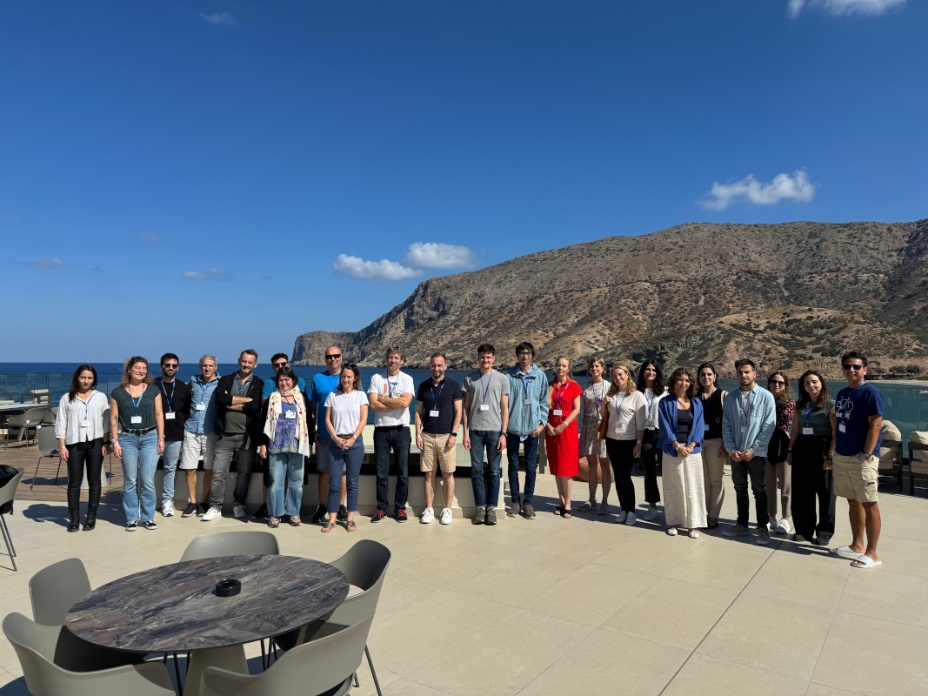
During RP1, RACE contributed to the international visibility of the University of Crete by supporting and helping to position Crete as a meeting point for leading researchers in genome integrity, ageing biology and related biomedical fields. A major activity in this direction was the organization of the EMBO Young Investigator Programme (YIP) Meeting on Genome Integrity, held in Crete on 13–14 October 2025. The meeting brought together an active international community of EMBO Young Investigators and associated researchers working on genome integrity, DNA damage responses, genome stability, cell stress pathways and disease-relevant mechanisms. The scientific focus of the event was closely aligned with the RACE research programme, which aims to strengthen UoC capacity in ageing and longevity research through work on genome instability, DNA repair, organismal ageing and age-related disease mechanisms. The event provided a platform for scientific exchange, networking and the development of new collaborations. It promoted active discussion among researchers at different career stages and helped connect UoC and Crete with high-level European research networks in genome integrity and ageing-related biology. By hosting this meeting locally, RACE strengthened the role of UoC as a visible and credible hub for research excellence in genome stability and ageing, while also increasing exposure of local researchers, students and postdoctoral fellows to a highly competitive international scientific environment. This activity contributed directly to WP12 by raising the profile of UoC and Crete in the European research landscape, expanding links with leading scientists and institutions, and promoting the dissemination of research themes central to RACE. It also supported the broader strategic objective of embedding RACE within international networks of excellence and creating conditions for future collaborations, mobility, joint projects and competitive grant applications.
Public engagement through media outreach on ageing and healthy longevity.
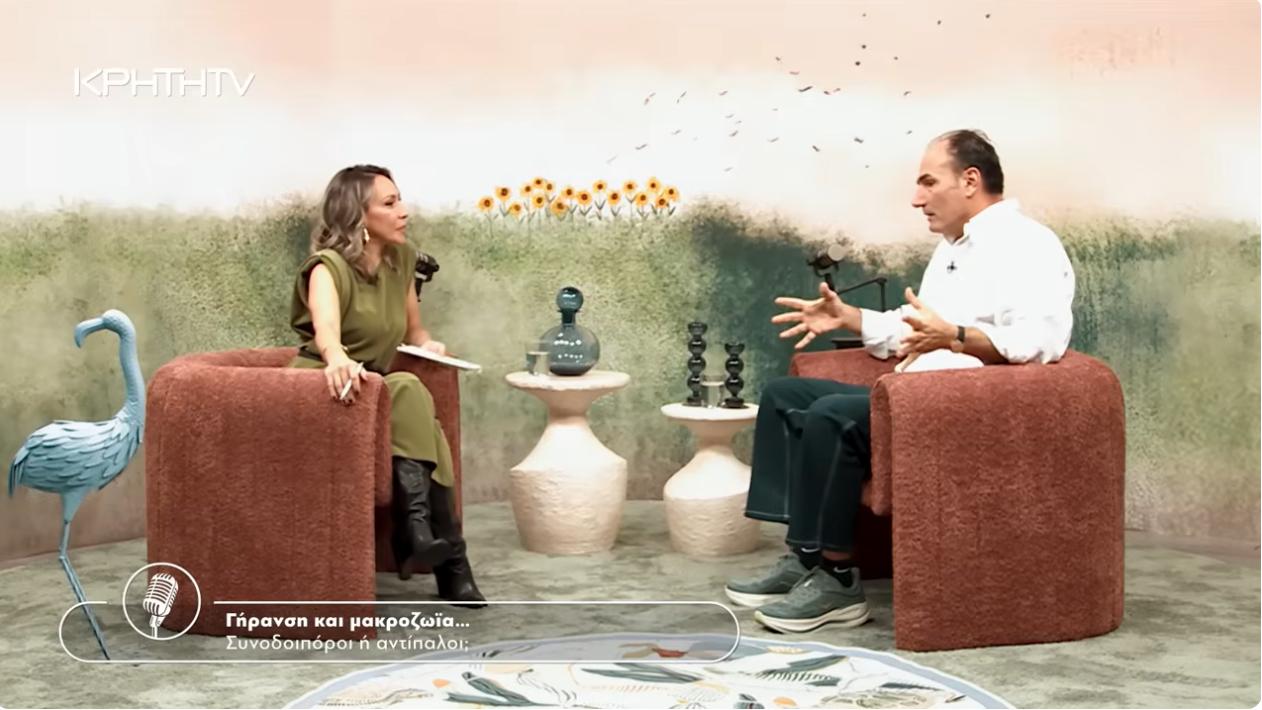
As part of the RP1 communication activities, RACE also contributed to public engagement through media outreach on ageing and healthy longevity. On Jan 8, 2026, in a public YouTube/podcast interview, Prof. George Garinis discussed the main scientific objectives of RACE: why humans age, how ageing differs from longevity, and why the central societal challenge is not simply to extend lifespan but to increase the number of healthy and active years. The discussion highlighted the demographic relevance of ageing in Greece, the rising proportion of older citizens, and the associated pressures on health systems, the workforce and the wider economy. It also communicated key scientific and public-health messages in accessible language, including the contribution of DNA damage and biological decline to ageing, the distinction between ageing and age-associated disease, and the importance of exercise, diet, prevention, social interaction and reduced isolation for healthy ageing. The interview therefore supported the RACE objective of enhancing the visibility of UoC ageing research and translating scientific knowledge on ageing and longevity to a broad non-specialist audience.
Björn Schumacher has been regularly featured in national newspapers and television

- https://www.ardsounds.de/episode/urn:ard:section:5565a646c49c6f1f/
- https://www.deutschlandfunk.de/blue-zones-das-geheimnis-der-100-jaehrigen-100.html
- https://www.ardsounds.de/episode/urn:ard:episode:3257eb7b918df481/
- https://www.ardmediathek.de/video/mein-koerper-oder-ard-wissen/ard-wissen-i-mein-koerper-mein-alter-wer-bestimmt-wie-alt-ich-bin/swr/Y3JpZDovL3N3ci5kZS9hZXgvbzIzMTU1MzI
He has given public talks and panel discussions such as the Koerber Foundation Forum in Hamburg in May 2026 and the Forum of Future in Munich in July 2026. He has participated in a number of podcasts including the Spektrum of Science
- https://music.youtube.com/podcast/Q6eyaw86Pyw
- https://open.spotify.com/episode/65MCelMxQ4P7dJQREOGR8H
- https://www.youtube.com/watch?v=KVF_N2a3IjM
- https://www.youtube.com/watch?v=-umfAzgU0KI
In the center was the dissemination of scientific advances in geroscience to the general public.
The communication plan targets scientific audiences, industry/economy stakeholders, policymakers, NGOs, patient groups, students and the general public. During RP1 the main achievement was the establishment of this strategy; implementation and measurable communication outputs will be consolidated in subsequent reporting periods.
- D12.1 Initial PDEC completed.
- Dissemination, exploitation and communication framework established.
- Open-access and stakeholder-engagement principles embedded into project planning.